
How Solar Events Influence Women’s Hormones, Cycles, and the Magnetite‑Driven Biology We Don’t Talk About
A wave of women across the world reported unusual menstrual changes in July — missed periods, double periods, or sudden bleeding after long gaps. I noticed the same pattern in myself. Nearing the end of perimenopause, my cycles stretch three to four months apart, yet during the last solar eclipse I started my period on the exact day of the event. And today, one day before the next major solar alignment, it happened again.
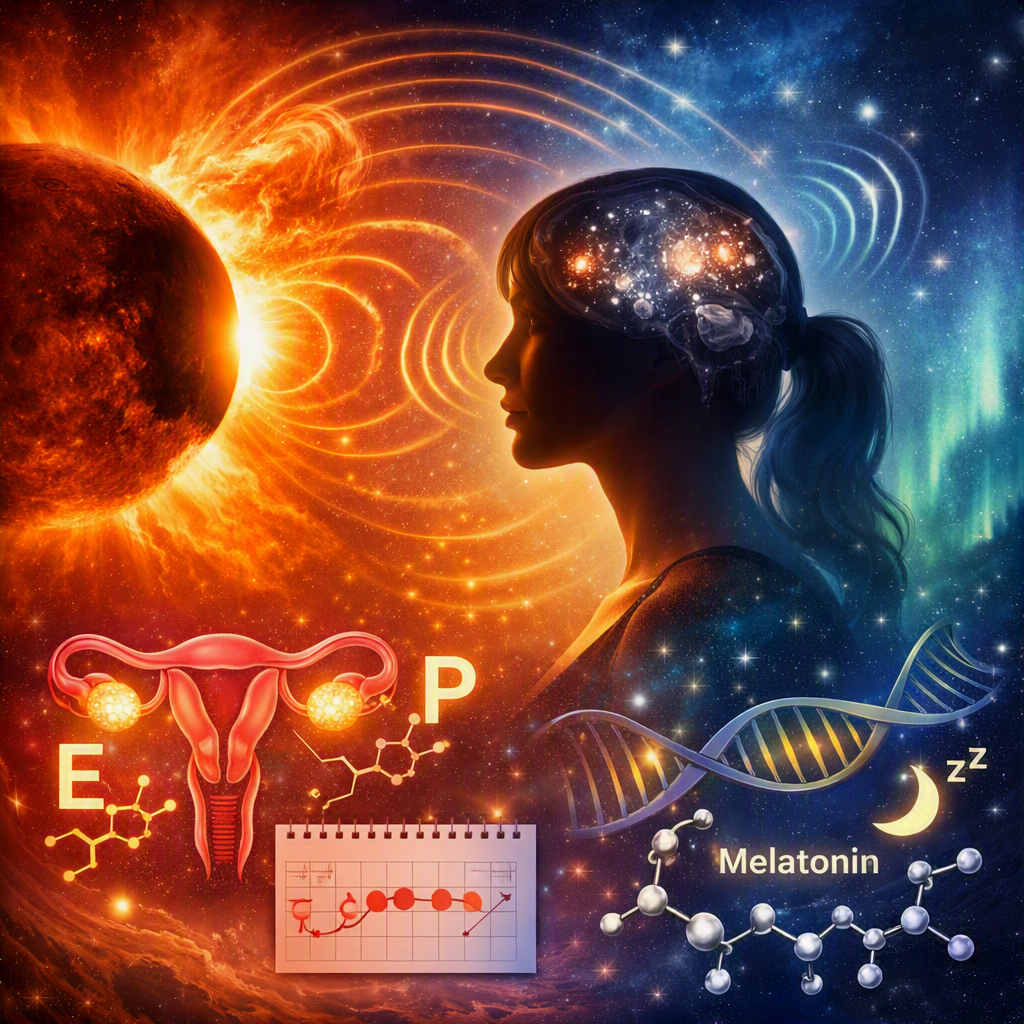
So I began researching the biological connection. Solar events don’t just darken the sky — they shift temperature, electromagnetic fields, ionospheric density, gravity, melatonin, cortisol, and circadian rhythm. Humans have magnetite in the brain, a mineral that responds to electromagnetic changes and influences melatonin and hormonal timing. During eclipses, melatonin spikes, cortisol drops, and the autonomic nervous system shifts — all of which can affect menstrual cycles, especially in perimenopause. Women are ecosystems inside Earth’s ecosystem, and when the environment shifts, our biology shifts too.